Showing posts with label Zaidee Jackson. Show all posts

Thursday, April 5, 2018

Zaidee Jackson: Romania's cantareata de culoare

https://momenteistorice.ro/o-poveste-de-film-zaidee-jackson/

The website, Momente Istorice wrote a nice article (in the Romanian language) on Zaidee Jackson. ☺

Friday, June 9, 2017

Chez Les Nudistes Cabaret


Chez Les Nudistes cabaret (1932-1937):

Built above Chez Joe Zelli's, featured Afro-American entertainer Zaidee Jackson and North-African dancer Belle Kadra in the 1933 revue: "Au Déla des Reins"


Monday, October 17, 2016

Zaidee Jackson: Negresa Electrizanta în România


Zaidee Williams-Jackson
(1898-1970)


Zaidee Jackson was born December 30, 1898 in Augusta, Georgia to C.J. and Alice Jackson, who were both sharecroppers in Berrien County, Georgia. Sometime after living in Europe, she began using 1900 as her birth year. Zaidee had three older siblings, Ora Lee, Era and Sol Jackson. Sometime around 1901, Alice left her husband and children, taking only the young Zaidee, and moved north to Boston, Massachusetts, where she met and married Fred Williams. Zaidee soon took her stepfather's last name. In 1902, Alice and Fred had their own child, Corinna. 

Sometime after 1917, Zaidee became acquainted witth Lawrence Benjamin Brown (1893-1972), a pianist from Jacksonville, Florida who had relocated to Boston to resume his studies. It wasn't long before Zaidee herself was studying piano as well. After Lawrence left Boston the following year as the accompanyist for tenor singer, Roland Hayes, the friends kept in contact 

On July 6th, 1920, Zaidee married local actor, James W. Jackson, and from 1920-1922, the couple relocated to Washington D.C. to study at Howard University. 

In October 1922, the couple traveled to New York, where they debuted as the "Jackson & Jackson" duo at Harlem's Lafayette Theatre, performing melodramatic sketches, songs and dances. Afterwards, the couple appeared in Philadelphia, Chicago and Cleveland for the next two months. On December 6th, 1922, the couple briefly separated when James abandoned Zaidee and returned to Harlem. However, within days, he was back in Cleveland and the couple joined the Bob Russell Company, extending their Ohio for another month. During the summer of 1923, the couple were a part of the "Wonderland Show", traveling around Kentucky and Alabama. From August 1923-October 1924, "Jackson & Jackson" traveled around the United States, with their own melodramatic sketches written by James.


Harlem (c.1920)

During the winter of 1924, the couple joined the Andrew Bishop company, a branch of the successful "Lafayette Players". For the next six months, the company appeared across the South and Mid-West. Zaidee also began composing her own songs, particularly, "Nobody Worries 'Bout Me", which was recorded in Chicago by blues singer, Sodarisa Miller around December 1924.

On February 28th, 1925, James abandoned the company and returned to New York. In July, Zaidee also left as well, joining the Wilbur Sweatman revue as a song-and-dance act. The revue traveled across New England, Canada and New York for the next four months.

Lulu Belle program (1926)

In December 1925, director, David Belasco, cast Zaidee and her husband in Broadway's latest lurid melodramatic play, "Lulu Belle". The mixed cast consisted of 100 Black and 15 White performers, the stars being major Black actresses such as Evelyn Preer, Ollie Burgoyne, Mattie Wilkes and Fannie Belle de Knight. Zaidee had a minor role in the beginning of the play as a Charleston dancer in a Harlem nightclub.

After a week at Philadelphia's Broad Street Theatre, the play opened February 9th, 1926, at the Belasco Theatre, the show performed successful 461 times before closing a year later on March 19th, 1927. During the run of the show, Zaidee also had the opportunity to perform afterhours at the Bramville Club and Club Alabam, known for its exotic semi-nude floor shows. Berween August-November, she was also signed to Gennett Records, recording six or more songs accompanied by James P. Johnson, Otto Harwick and Duke Ellington. Only four recordings were released.

In October, Zaidee and several other cast mates from "Lulu Belle" traveled to Baltimore with Black film director, Oscar Micheaux, to film his latest drama *The Spider's Web*. Micheaux's *The Spider's Web* was released on January 6th, 1927. 


In February 1927, before the close of "Lulu Belle" and with her growing success, Zaidee decided to divorce her husband. 

That spring, she appeared in "Desires of 1927" at the Lafayette Theatre. The revue was staged and produced by Irvin C. Miller with Adelaide Hall as its star.

In July, Zaidee was cast as Magnolia in Miller & Lyle's, "Rang Tang", which opened July 12th for 112 performances at the Majestic Theatre. The two-act musical comedy was set in Madagascar and Harlem and featured Flournoy Miller, Aubrey Lyles, Daniel Haynes and Josephine Hall. After its Broadway run closed on October 22nd, as the show prepared to go on the road, Lawrence Brown (who was touring Europe with Paul Robeson) convinced Zaidee to join him in France while Robeson was away celebrating the birth of his son. By November 1927, Zaidee had joined the numerous African-American expatriates in Paris' Montmartre district trading in on the French fascination for "Negro" culture. 

Man Ray's Studio (March 1929)

Throughout January-February 1928, Zaidee was in Cannes, performing at the KitKat cabaret. Her performances sparked the interest of numerous members of the British elite such as Elsa Maxwell, the Duke of Kent, and especially the Countess of Carnarvon, who purchased Jackson's plane ticket to London in May.

In June 1928, she was the star of "Playtime at the Piccadilly" at London's Piccadilly Hotel for the next five months. During the run of this revue, she also sang on BBC Radio and doubled at the illustrious Uncles Club. On August 28th, she recorded two numbers with HMV Records accompanied by pianist Carroll Gibbons, which were never released. On September 19th and again on the 29th, she recorded the American folk song, Waterboy, with British Duophone. Each recording was rejected.

In October 4th, Zaidee was hired by director, Albin Limpus, to perform Spirituals and Folk songs accompanied by Winifred Smith's Orchestra every afternoon before the curtains raised on May Eginston's latest play, "Deadlock" at the Comedy Theatre. The play ran for 17 days before closing. In-between singing daily at the Comedy, nightly at the Piccadilly, she also found time to record four songs for British Duophone, which were released to public with overwhelming success.

In November, once her contract with the Piccadilly ended, Zaidee returned to Paris to perform for a week at the Plantation Cabaret with Eddie South's Orchestra. While in Paris, she met Afro-British pianist Reginald Foresythe performing in local club and she quickly recruited him as her new pianist. On November 12th, Zaidee and Reggie flew back to London on the Imperial Air Lines for a weeks engagement at the Café Anglais. During this engagement, she recorded four more songs for British Parlophone. Eventually, Forsythe struck up a friendship with leading Harlem musical theatre tenor, Walter Richardson and the duo soon departed for a year-long Australian tour. At the end of the month, Zaidee returned to Paris alone, performing at the Lido des Champs-Elysées with Eddie South's orchestra.

Man Ray's Studio (March 1929)

In January 1929, Zaidee returned to London, recording one song with Metropole Records and four unissued songs with Duophone. Returning to Paris on January 26th, she performed at the opening Ada Bricktop Smith's latest nightclub. Shortly afterwards, Zaidee purchased a comfortable apartment on the Rue Chalgrin, a small right-angle street in the Chaillot district, where she held intimate cocktail parties before whisking her guests over to the Bal Negre cabaret to dance the Beguine. On April 6, Jackson converted her apartment into small cabaret (short-lived unfortunately), Chez Zaïdée, imitating Josephine Baker's own French nitery. Throughout the spring and summer, she also performed regularly at the famous Boeuf Sur Le Toit, Chez Florence, Mirador and Floresco's before she was left hospitalized on July 27th with a sprained ankle.

Between July-September, she frequently flew back to London for quick radio appearances. She often traveled on Guy Robson's private plane, who occasionally enjoyed showing off with his stunt flying, turning flips over the Channel.

In November 1929, Zaidee returned to Britain for an extensive 8-month British tour organized by her manager, E.J. Bonner. Between January-April 1930, she recorded six more songs with British Parlophone. In June 1930, towards the end of the tour, Reginald Foresythe returned to Englsnd and accompanied Zaidee once again before he departed again, this time for America. 

With her British tour over, on June 16th, Zaidee was back in Paris, with a four month contract with Russian-themed Sheherazade Cabaret. Between June-August 1930, she returned to London to record her six songs with British Parlophone and appear on the BBC.

London (1930)

In November 1930, Zaidee was in the German capital, appearing at the famous Kabarett der Komiker. Unfortunately, the press wrote mixed reviews for her singing, which most German audiences felt was barely audible in their large concert halls.

Returning to France the following month, Zaidee was seen performing around Biarritz with her new accompanist, Norman Lloyd, a young white pianist from New York. 


Man Ray's Studio (March 1929)

In January 1931, she returned to Paris for a well received months' engagement at the L'Ange Bleu Bar and Frisco's (owned by the Jamaican Jocelyn Augustus Bingham, who went under the name of Frisco). The following month, she continued her European tour, appearing in Budapest at the Royal Hotel, accompanied by Russian pianist, Suponitzkaya. Her performance were broadcast nightly on Hungarian radio stations.

Returning to Paris in June, at the height of the Exposition Coloniale, she appeared in a new cabaret, La Jungle-Montmartre, performing her intimate songs. La Jungle-Montmartre was short lived and she eventually moved on to the Music Box, New Marine Club, Chez Dinah and Le Miami Club (quitting after they failed to pay her). That winter, George White offered her some of the music scores from his Broadway production, Scandals of 1931, probably with the intention of her joining the show or simply for a recording session that never materialized.


Zaidee entertains Maurice Chevalier (1932)

Throughout January-April 1932, Zaidee relocated to Cannes, opening her latest nightclub, Sous le Maquis, hoping to have Josephine Baker as her headliner. The establishment was briefly successful, but she eventually decided to return to Paris.

In May, she began a six-month residence at Le Bosphore (another Russian cabaret) and Chez Zelli's (an American themed nightclub). In July, she also began performing at the Sheherazade cabaret as well, singing and dancing eccentrically. In August, she departed for month to the resort town of Saint Jean-de-Luz for a month engagement at the Maxim Bar.

By December 5th, Zaidee had returned to London, with a major role in William Walker's, "Ballyhoo Revue", which opened December 22nd at the Comedy Theatre. The cast included Hermione Baddeley, Walter Crisham, Phyllis Clare, Pearl Argyle and Leon Morton.

The two-act revue was devised and staged by William Walker and Robert Nesbitt. Dances and Ballets staged by Buddy Bradley and Frederick Ashton. Zaidee made her initial appearance in Act 1 in the fourth sketch, "Black Magic", performing a gloomy blues number (Black Magic), while Crisham and the chorus girls danced around her. She returned again in sketch 12, "Mediterranean Madness", performing a much more lively number. She made her final appearance in Act 2 in the slow melancholic sketch, "A Window In Harlem", performing I've Got The Wrong Man.

The British press was extremely critical of the revue, although the dance and ballet number were considered stellar, the singing of Phyllis Clare wasn't received well and Zaidee's voice wasn't considered "Harlem" enough for the show. Often her voice would be drowned out by the singing of the chorus girls.

Zaidee and Walter Crisham (1933)


On March 17th, 1933, Zaidee returned to her regular appearance on BBC Radio. She also began doubling at the Blue Train nightclub. In the meantime, film director Andrew Buchanan took her on screen, appearing in two short films with the Ideal Cine-Magazine, *I've Got the Wrong Man* and *Black Magic*. With Odeon Records, she record several numbers from the show, such as the comedy number, Pink Elephants, I’ve Got the Wrong Man and Black Magic. 

Once "Ballyhoo" closed April 22nd and reopened nine days later on May 1st at the Leicester Square Theatre.

However, Zaidee soon bailed on the show, returning to Paris to perform at the Robinson nightclub. 

In June, she starred in Joe Zelli's brand new cabaret, Chez Les Nudistes, where Zaidee appeared semi-nude in an extravagant revue,"Au Dela... des Reins" for the next four months. She also doubled at the Sheherazade, Le Grand Ecart and Le Bosphore cabarets. In September 1933, she took a month off to appear in Saint Jean-de-Luz at the Auberge Club.

Switzerland (1935)


Although the Depression arrived in France in 1931, it didn't seriously affect the country until early-1934, causing the economy to fall apart and public demonstrations sprouting everywhere. Besides her occasional appearances in Paris at the Hotel Ritz, Sheherazade and Le Bosphore cabarets, Zaidee soon began touring the French Riviera, appearing in Juan-Les-Pins, Evians-Les-Bains, Cannes and Monte Carlo.

In June 1935, Zaidee departed for Switzerland for an eight-month tour with Benny Peyton's Jazz Kings orchestra. They appeared in Ouchy, Lausanne, Berne, Neuchatel and Geneva. In-between engagements, Zaidee frequently returned to France for appearances in Saint Jean-de-Luz and Paris.

Barbu Neamtu in Monaco (c.1936)

Returning to France around Late-January 1936, stable employment was still difficult for African-American entertainers and Zaidee possibly returned to the French Riviera. Around this time, as the annual Rallye Monte Carlo came to a close, Zaidee was introduced to one of the racers, 32-year old Barbu Neamțu, a wealthy Romanian mechanical engineer who was a great sportsman and Ford representative in Bucharest. 

Barbu was born c.1904 in Craiova, a city of 100,000 located in the midst of the rich agricultural territory of Southwestern Romania. He was the eldest of six children of Eugenia Albeanu and Constantin Neamtu. Besides being wealthy landowner, 69-year old Constantin Neamtu had an expensive Romanian and Belgian education and was a professor, the director of the Romanian National Bank (Craiova Branch), director of Craiova's Commerce Bank and a local politician.

In the early-1920s, Barbu had traveled to England, studying English and economics while attending Oxford University. While he was away, his father presented him with a position as a deputy of the city of Craiova. In 1931, he became the director of SEBAR, a truck and tractor manufacturing plant (a branch of Ford-Romania). As early as 1934, Barbu also took speed racing as a hobby, winning numerous trophies from races held in Monte Carlo, Brasov, Cluj and Bucharest.

By 1936, Barbu was already in an extremely unhappy marriage, from which he had a daughter. Nevertheless, upon his return to Craiova from the Rallye Monte Carlo, he brought with him, his new Black mistress. This caused an immediate scandal across Craiova, especially as, according to the locals, Zaidee was the first Black woman they had ever seen in person. Local children followed her around town, attempting to rub the "Blackness" from her skin. While Barbu began divorce proceedings with his current wife, Zaidee was quickly relocated to Bucharest, residing at 9 Strada Arcului, a comfortable metropolitan residence that her future father-in-law rarely used. 


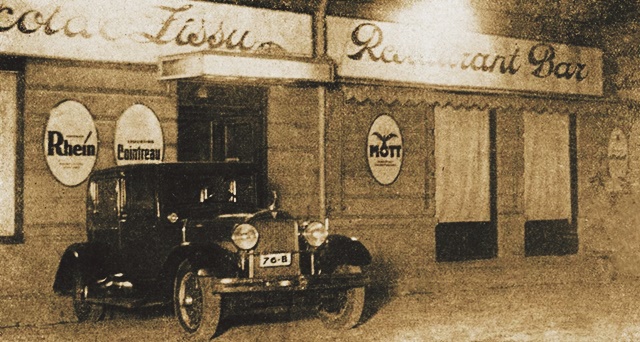
Restaurant Bar Zissu

From 1936-1937, Zaidee maintained a residency at Bucharest's Restaurant-Bar Zissu, an extremely lavish and overpriced Parisian-themed cabaret located at 5 Strada Serban Voda. She danced and performed in English, French and soon began including Romanian songs as well. At some point during this period, Zaidee also departed for a brief Egyptian tour.

On October 27, 1937, Zaidee boarded the SS Queen Mary from Cherbourg back to New York. Landing on November 1st (exactly a decade since her departure), she moved into the Dewey Square Hotel on Seventh Avenue and began a ten-month nightclub engagement in New York and Philadelphia. Upon arrival, she was met by American journalists, such as those of the Pittsburgh Courier: "Zaidee Williams Jackson was singing sweet songs at Chez Florence in Montmartre when we met her. A slim bronze young woman, who had Paris by its ears. We wonder if anyone who has lived over there for ten years as she has can come back here to prejudice and hate and pick up where she left off. We don't doubt that she'll return to Europe where, she says ’her work is more appreciated... and more lucrative.’"


1938

While away in America, Zaidee avoided the terribly repressive policies of the new Prime Minister, Octavian Goga, who issued numerous anti-Semitic and other xenophobic laws. During Bucharest's Expoziție Naționale, anti-Semitic and even pro-Fascist-themed displays were on exhibit. Thankfully, it was over by the spring of 1938, when Goga died suddenly of a stroke and a majority of the laws were reversed.

In March 1938, Barbu traveled to New York (his divorce must've been finalized) and moved into the Dewey Hotel with Zaidee. It's possible to couple soon became engaged and traveled to Boston to meet with Zaidee's relatives.

The couple returned to Romania in September, where they possibly wed at "Conacul Neamtu", the Neamtu family estate, located in the village of Olari, an hour outside of Craiova. On September 27th, Zaidee received her new passport and registered at Craiova's police station.

As expected, the marriage marred by jealousy and racial prejudice of her husband's numerous family (and the neighbors) who felt that Barbu had married beneath himself. He was accused of renouncing his family for a Negro. Zaidee, the 41-year old (although she claimed to be four years younger) Black cabaret star who who could hardly speak Romanian and performed naked in Paris wasn't considered an equal to 34-year old extremely well educated and privileged Barbu. To make matters worse, the Romanian government made it difficult for Zaidee to renew her work visa, demanding that she had be an "Ethnic Romanian." 

In November, she returned to Paris, appearing at Jimmy Monroe's Swing Club. The following month she appeared in the revue, "Harlem au Coliseum" at the Paris-Coliseum, music provided by Willie Lewis' Orchestra.

Neamtu family country estate

Early 1939, despite warnings from the American Embassy of impending war, Zaidee remained in Paris, performing at Fred Payne's Bar. However, in February, she had returned home to Craiova, registering with the National Liberal Party (possibly a party her husband was involved with).

Barbu and Zaidee packed up and purchased an comfortable house in Bucharest beside the Liceul Militar. These were halcyon days for the newlyweds. Barbu was frequently away at his office in Craiova, leaving Zaidee alone in their new home and a chauffeur to drive her wherever she needed to go in one of Barbu's many luxurious British-made automobiles. Zaidee also returned to her place as the star of the Restaurant Zissu, alongside Jean Moscopol (Romania's version of Maurice Chevalier). Occasionally, she also appeared at the Maxim Zig-Zag Cabaret at 5 Strada Otelelisianu. 


Barbu Neamtu (Second from Left) at the Rallye Bucuresti

 After the outbreak of WWII, Zaidee's ties with the Western world was completely severed. Despite the progression of the war, Zaidee was able to continue working and her popularity amongst Romanian audiences grew.

Across Romania, soldiers were every corner, young men standing in long lines answering the draft. Thousands of men were boarding trucks heading for their local regiment bases. In Bucharest, the swastika flew beside the Romanian flag as King Carol made it no secret that he supported the Nazis. 

In July 1940, King Carol handed over Bessarabia to the Soviet Union, causing uproar across Romania, especially as fleeing Bessarabian refugees crowded the streets of Bucharest. Two months later, in September 1940, the king was forced into exile and General Ion Antonescu seized power for the next four years. Romania soon announced its new alliance with Nazi Germany. The American Ford company immediately severed ties with Romania, and Barbu's SEBAR company began manufacturing military-grade vehicles for the Germans.

Bombing of Bucharest (April 1944)


From 1940-1944, Zaidee's life was hardly interrupted by the constant changes Europe was going through. As a Romanian citizen, in a country safe from Nazi invasion (as long as they upheld their alliance), her career was basically unaffected

However, she was a witness to German tourists and military personnel walking the streets and enjoying themselves in Bucharest's many hotels, restaurants and cabarets. At night, truckloads of Jews were rounded up from their home, disappearing to camps in Poland and Bessarabia. Often, during her trips to Craiova, she witnessed in the distance, piles of dead Jews being dumped from cattle cars into the forests.

In 1943, Romania became a regular target of Allied aerial bombardment, such as the attack on the oil fields of Ploiești on August 1, 1943. In October 1943, a frustrated Barbu was forced to close his factory temporarily after a worker's strike.

By 1944, Bucharest was subjected to intense bombing on 4 and 15 April 1944, and the Luftwaffe bombed the city on August 24 and 25 after the country switched sides. Windows were shattered, buildings were gutted, and walls bore the tracks of machine-gun bullets. At night, windows were shuttered and curtains tightly drawn. There must be no visible light to guide enemy aviators. The radio echoed with news of death and destruction.

Theatres, cabarets, cinemas were shut down, if they weren't damaged by the bombs. Escaping the capital, Zaidee packed up everything and relocated to the village of Olari, safely 200 miles away from the destruction. 

On August 30th, 1944, Soviet troops occupied Romania. Bucharest was heavily militarized, the streets filled with soldiers, many of them looting abandoned homes. Gypsies, Jews and many other marginalized members of the lower class quickly rose to power in high government positions.

There were shortages of everything. Of course officials with big salaries could get what they wanted. Formerly well-to-do people carried their dwindling stock of goods to the immense open air market to sell for what they would bring in order to keep alive. 

Bucharest's Victory Boulevard

In 1945, SEBAR was reopened, this time to manufacture vehicles for the Soviet Union. In Bucharest, the entertainment was revived as many establishments reopened. Zaidee moved their belongings back into their house and resumed performing.

From 1945-1947, appeared for her final years at the Restaurant Zissu. Initially she was unable to seek work as she was refused a work permit. After six months without work, the government relented and issued her permit. However, she was only allowed a meager worker's salary of 600 leis a month. But after much protest, she was finally upgraded to an artist's salary of 1,500 leis a month. Nightly taxi cabs to and from, her jobs cost 30 leis daily, which meant spending two-thirds of her salary for transportation. Often she chose to walk two miles in the dead of night from her apartment to save money to eat since meals were no longer supplied to artists.

In September 1946, the Soviet government shut down SEBAR and Barbu remained in Bucharest permanently with his wife. Although engineers were in great demand, he however could get very little work as one had to be approved by the State. However, his other siblings were able to find government jobs.

On December 30th, 1947, the old monarchy was abolished and Romania became an republic. The director of the Zissu closed down the popular establishment and fled to Bulgaria. Zaidee promptly found employment at the Circ Bucharest, appearing in a lavish revue, where in one of the scenes, the vibrant 50-year old Black vedette entered the stage riding on the back of a camel before performing an exotic number.

Due to the heavy censorship of Western music and culture, Zaidee surprisingly remained extremely popular amongst Romanian audiences, even with the youth, who saw her as Romania's own Ella Fitzgerald, Billie Holiday or Josephine Baker. Despite her popularity, Zaidee encountered all sorts of prejudice and discrimination from musicians and managers. 

1950s Bucharest

In June 1948, all businesses and establishments became nationalized by the government. Despite being an entertainer, she was still considered an employee of the state. This caused the American Embassy to declare her passport void, making any possibilities of visiting the United States impossible. Six months later, during Christmas, the  Securitate (secret police) raided the Neamtu estate in Olari and declared it property of the state. Zaidee's in-laws were left outside in the snow surrounded by their belongings.

Later, during the summer of 1949, she began corresponding with her old friend, Lawrence Brown, who was touring the Soviet Union with Paul Robeson at the time. She described the new way of life under the new government and her growing fears of her uncertain future in Romania.

On April 14th, 1951, Barbu and the majority of the Neamtu family were declared "Bourgeois spies" arrested sent to Ghencea Penitentiary (a local Bucharest prison) for 18 months. Zaidee was unable to write or visit. Later in September 1952, the family was divided up and sent to various camps such as Popești Leordeni Camp, Pipera Farm, Dumbrăveni Penitentiary, Jilava Penitentiary, Peninsula Camp and Aiud Penitentiary where they were ill-fed and given the most arduous physical tasks. There was never a charge or a trial. After four years they were all released, broken and impoverished.

Zaidee soon began petitioning the American Embassy to issue a new passport to her. Initially, the Embassy was sympathetic but later became uncooperative due to the antagonism of a Hungarian woman secretary. Meanwhile, her sister, Corinna Williams-Thomas, was working indefatigably in her behalf, although writing to President Truman produced no results. Zaidee wrote to Paul Robeson and William Patterson, who were both known to be close with the Communists. Neither deigned to reply.

Once Barbu was released early-1955, he received a job in the provinces and attempted to convince Zaidee to accompany him. Instead, she chose to remain in Bucharest, suggesting that they divorce. While in the process of divorcing, in April 1955, her sister wrote to President Eisenhower who promised prompt action. After the divorce was finalized, Zaidee departed for a tour Romania's major cities.


Late-January 1956

In January 1956, the US, State Department sent her American passport. Although nervous and tense, Zaidee was eager to valiantly resume her career on the American stage, 17 years since her 1938 tour. January 1956, Zaidee received the thrilling news that she would be able to travel to America. "I was reborn,"  she said smilingly. “I never really gave up hope," she said. "But there were many times when my situation seemed utterly hopeless." She flew to Amsterdam and changed planes for New York, where she was greeted with an American passport. She luckily missed the Red-Scare movement, although there was still heavy prejudice of Communists (and those who had lived for nearly 20 years in a Communist country). Her return to the American stage may have caused more strain on her already shaky marriage, caused the couple to eventually separate. Her time in America is not well documented since her return, except for an appearance in Boston in 1957 and a brief interview in Harlem during the summer of 1967, with Frank Driggs. Zaidee Jackson died on December 15, 1970, near her sister's family in Connecticut.

Thursday, July 14, 2016

Myrtle Watkins: Paquita Zarate

Paquita Zarate (1908-1968)

Paquita Zarate, was born Myrtle Dillard on June 23, 1908 in Birmingham, Alabama as the fifth of six children of Betty S. Jackson and Jasper Lonnie Dillard. By 1910, the family was residing at 1012 Mortimer Street and Mr. Dillard supported the family by running a local grocery store (J. L. Dillard's Fish Co.).

In 1925, 17 year old Myrtle left home, traveling north to Baltimore with a vaudeville show, before remaining in the city with her dance partner Yank Brunson. In January 1926, Myrtle had joined the Eddie Lemon Stock Company, as a chorus girl, in the latest production "Who's Dat?" at the Regent Theatre. The show ran for a month, afterwards the company moved out of town the following month. Myrtle however remained in Baltimore, joining the cast of Lew Peyton's "Brownskin Vamps", another vaudeville production at the Regent, where she stood out in her own solo Charleston dancing number. On February 20th, during the run of the show, Myrtle married local mechanic and chauffeur, Cephus Watkins, with her friend, local Blues singer, Lucille Henderson as her maid-of-honor. The couple moved into his apartment at 1425 Fairmont Avenue and Myrtle announced to the Baltimore Afro-American newspaper her intentions of retiring from the stage. In March, she received a gig, dancing in East Baltimore at the Folly Cabaret, which catered exclusively to white patrons. Although her marriage to Cephus was short lived, she kept his last name for the next 14 years.

"Rarin' To Go" Chorus Girls (1926)

In April 1926, Myrtle joined the cast of Edward E. Daley's touring musical revue, "Rarin' To Go". The show, with a integrated cast, had been touring along the exclusively-white Columbia Burlesque circuit since late-1925. The black cast included comedian Tim Moore (of Amos and Andy), his wife Gertie Moore, Lovey Taylor, Florence McClain, Jimmie McPherson, Dancing Dane, Lena Wilson and Gladys Smith. Myrtle spent two months with the revue, travelling through Baltimore, Washington DC, Pittsburgh, Buffalo, New York City and Boston. She quit the show that summer, shortly after the revue closed and became a dancer at the Avalon Ballroom by October 1926.

By January 1927, she was performing around Boston metropolitan-area with the Bostonian Harmony Lads Orchestra singing light blues, however in the Afro-American Newspaper, she mentioned that she missed Baltimore.


In Late-September 1928, Myrtle landed a position in the traveling version of Lew Leslie's "Blackbirds of 1928". On October 29th, the revue opened at Boston's Tremont Theatre and starred Adelaide Hall, Worthy & Thompson (replacing Bill Bojangles Robinson), Aida Ward, Tim Moore, Blue McAllister, Johnny Hudgins, Mantan Moreland, Cecil Mack, Nina Mae McKinney, the Blackbirds Beauty Chorus (featuring both Myrtle and Elisabeth Welch) and the Famous Blackbirds Orchestra conducted by Felix Weir. Orchestral arrangements were by Will Vodery. For the next seven months, the revue traversed across the United States, appearing in Boston, New York City, Philadelphia, Pittsburgh and Washington DC.

On February 4th, 1929, during the revue's Philadelphia run, Eddie Thompson, one of the show's leading dancers and part of the duo Worthy & Thompson. On May 24, when the revue boarded the SS Ile-de-France, arriving on the French coast a week later. The Blackbirds opened at Paris' Moulin Rouge on June 7th to immediate success. Some of France’s top stars attended the opening, including Mistinguett and Maurice Chevalier. There they played three months before the French director renovated the Moulin into a cinema. Returning to the United States in September, the revue resumed it's usual East Coast touring schedule before finally dissolving by October, coinciding with the famous Wall-Street Crash and suddenly there was difficulty finding work for artists.


By March 1930, Worthy & Thompson were touring the American Mid-West and Myrtle was performing at Harlem's Lenox Club as a chorus girl in the floor show. That month, Afro-American songwriter, Eugene Newton returned from France to organize a new revue (with the help of S.H. Dudley Jr.), Gene Newton's "Chocolate Revue", the show included Louis Cole, El Brown and comic Snow Fisher. On April 11, the revue boarded the RMS Homeric to France, arriving a week later. The "Chocolate Revue" opened May 1st, at the Gaiety Cabaret, however by May 23rd, French authorities shut down the cabaret due to a lack of permits. On May 24th, the revue re-opened at Eugene Ballard's Embassy Club as, "Revue Noire: Hot Stuff!" where it remained for the next two months. In-between dancing nightly at the Embassy, Myrtle also appeared at the Enfants-Terrible restaurant with the Senegalese dancer, Francois 'Feral' Benga alongside Lucienne Boyer, Alina de Silva, the Irving Sisters, Charpini and Brancato and M. Pisella to the sound of Pance Lowry's orchestra. After "Hot Stuff" closed early-September, she began performing at Chez Florence with Elisabeth Welch until her partner eventually returned to New York. 

Galan Photography Studios (Oct.1931)

On January 6th, 1931, Myrtle with her Red Hot Coals Jazz Orchestra at Madrid's Lido de Madrid Cabaret (in the basement of the Teatro Alcázar) located on Calle de Alcalá 20 until March 7th. Her arrival was probably organized by Spanish author and lyricist, Alvaro Retana, who was known for introducing black jazz entertainers into Spain. Retana mentioned in his memoirs later how she performed semi-nude, imitating the Spanish dancer Carmen Tortola Valencia, under the name Perla de Oriente. On April 14th as Niceto Alcalá-Zamora y Torres was declared the president and former King Alfonso XIII abdicated peacefully and boarded a train to France for exile. Eight days later, Myrtle opened at Seville's Casino del Exposicion, where she was entertained audiences in a gala celebrating the end of the repressive Spanish monarch of which she only witnessed three months of.

Trio Morel Marino y Watkins (c. August 1931)

In May, she returned triumphantly to Madrid's Lido Cabaret as celebrations continued to fill the streets. On June 6th, she was entertaining at the Sala Metropolitano, three days later she moved over to the Ideals-Rosales open-air cabaret performing with Carlos V.G. Flores' Orchestra until July 6th. It was during this engagement she was introduced to Argentine singer-guitarist Alfredo Marino (born January 30th, 1904) and his partner, Hector Morel. Once her contract ended at the Ideal-Rosales, She joined the duo on a tour across Spain's northern coast in cities such as Bilbao, Oviedo and San Sebastián.

Teatro Alkazar (Aug.1931)
Upon returning to Madrid on July 22nd, she appeared at the Casanova en Stambul cabaret alongside Manuel Pizarro's Argentina Orchestra for three days. On August 11th, Myrtle appeared at the Dancing Retiro, a nightclub located in Madrid's lush Parque del Buen Retiro alongside popular Afro-American bandleader Harry Flemming and his orchestra. Two days later, she reunited with Morel & Marino and together they performed at the Teatro Alkazar in a magnificent revue for six weeks.

On October 2nd, Myrtle appeared at the Circo Price for three days before boarding a train to Barcelona. Not long after arriving, she made several appearances on Spanish radio and recording several songs for the Compañía del Gramófono-Barcelona. None of the recordings seem to have survived, however she was noted as performing El Manisero and other popular Cuban rumbas and Spanish pasodoble toreros around this time. On  27th, together with Afro-American dancer, Josephine Wynn (who she met months earlier at the Retiro), opened at the popular Eden Concert musichall, where they performed a successful month. On November 8th, Myrtle participated in the "Fiesta Parisiana" at the Eden Concert alongside, Afro-Uruguayan singer Oscar Rorra, known under stage name: Caruso Negro. On the 17th, at the Teatro Novedades, she performed in a benefit for Barcelona's firefighters. On November 21st, Myrtle participated in an eight-day variety spectacle held at the Circo Barcelones, alongside some Spain's top entertainers. On December 16th, she appeared with Afro-American dancer Jimmy Holmes at the Buena Sombra cabaret until February 3rd.


From February 28th until March 16th 1932, she performed with Afro-American bandleader Levi Wine's "Revista Americana", which included popular Spanish cabaret artist, Bella Dorita, at the Ba-Ta-Clan in Valencia. She returned to Madrid a week later and establishing a residence at the Hotel Florida. On April 8th, Myrtle opened at the Teatro Fuencarral, where she also appeared in the revue, "Folkoricos Arrevistados", alongside Argentinean actress Perlita Greco and Rosarillo de Triana. Afterhours, she would go over to the Lido de Madrid Cabaret with Louis Douglas's floor-show "Fantasías de la Ciudad Negra".

*

Madrid (early 1932)

Early May, while Louis Douglas recovered in a local hospital with stomach pains, together with dancer, Scrappy Jones, he reorganized the company from his bed. On May 21st, "Modern Melodies" opened at the Avenida Cinema dancing in front of the band in a costume with red feathers swinging on her backside. One visiting journalist for the Afro-American described her as the Josephine Baker of Spain: "Miss Watkins is a very good dancer, with plenty of pep, and a pretty shapely figure. She is making conquests in high society and on her string is the marquis of one of Spain's bluest blue bloods. She lives at the Hotel Florida, one of the best hotels in the city, has a fine roadster, records for Spanish gramophone and radio, and entertains at one of the leading cabarets." The revue closed on June 16th and Louis Douglas took the company over to another theater. It's unknown if Myrtle joined them. On July 14th, Myrtle and Josephine Wynn traveled to the city of Zaragoza to appear for three weeks at the Florida Bar. On October 4th, Spanish newspapers reported that an upcoming film, entitled "Movietone 1933", was under preparation at a Madrid film studio. The film was to feature Perlita Greco, Myrtle, Scrappy Jones and several other Spanish actors. However it's unknown whether the film actually materialized. On the 13th, Myrtle was in the city of Huesca, appearing at the Cine Odeon with Cuban saxophonist, El Negro Aquilino and his band. By December, Myrtle was in Seville, at the Kursaal Internacional, performing her latest hit, "Negra De Mi Vida".

Jazz-Wereld Magazine (1933)
On January 10th, 1933, she was appearing at the Teatro del Duque. On the 21st, she was in the nearby city of Huelva engaged at the Teatro Mora. A while later, on March 9th, she was the Pathe Cinema for four days. 

After four months in Andalucía, Myrtle departed from Spain for the first time in two years, traveling to Belgium, where she toured Josephine Baker's former bandleader, Robert de Kers. In June, Myrtle, de Kers and French composer, Georges Van Parys composed and recorded the song, Rose Creole (Lonely Brown Rose). During her Belgian engagement, she also appeared on the covers of Belgian magazines alongside Eddie Cantor.

Returning to Spain during the fall, Myrtle opened on September 15th at Barcelona's Teatro Romea in Max Guido's "Jazz Show" revue for two successful weeks. Afterwards, the revue toured Catalonia, appearing in Taragona's Salo Modern. On October 7th, she moved over to the glamourous Pompeya Musichall where she danced all evening for a month, and then after midnight would run down the street and sing at the popular Hollywood nightclub which would be broadcast floorshows over the radio. There she performed alongside her latest rival, 17-year old Puerto Rican from Harlem, Elsie Bayron. On November 17th, Myrtle appeared at the exclusive Casa Llibre Tea Rooms singing for some of Spain's elite. Late December, Myrtle paired up with Afro-American pianist Tommy Puss Chase and his band for a tour of the southern coast of France. "Myrtle Watkins was a very enterprising girl, always had some kind of band with her, and was a very good looking and talented singer and dancer." 


Throughout the first three months of 1934, Myrtle and the Puss Chase Orchestra appeared in Cannes, Nice and ended in Monaco during the Rallye Monte Carlo. In March, Ada Bricktop Smith postponed the opening of her new establishment in anticipation of Myrtle's arrival in the French capital. On April 1st, 1934, Myrtle opened at Bricktop's latest Parisian cabaret alongside pianist Freddie Taylor, Monico's, where she was advertised as "the world’s most fascinating entertainer". Two months later, on June 2nd, she moved on to the Basque Bar with entertainer Evelyn Dove. 

On June 29th, Myrtle left for the British capital of London. A few days later, on July 2nd, she was headlining at the Granada Theater's ‘all-colored’ revue, "Black Scandals" for a week. The films shown that week on the manager's weekly report states that both films were rather weak, and had it not been for the stage show, the takings would have been down. On July 14th, newspapers reported that Myrtle returned home to Spain to handle affairs. Two weeks later, she was entertaining at the Maxim's Restaurant in Saint Jean-de-Luz. In August 1935, she was in The Netherlands, dancing in The Hague at the popular Palais de Danse cabaret with French singer, Marie Dubas. The following month, she was at the Cabaret Hollandaise. On November 3rd, Myrtle was appearing at London's Cafe Anglais with Louis Simmonds' Orchestra, where she possibly remained for the winter.

Bombay (September 27, 1935)

On January 31st, 1935, she returned to Paris, appearing at the popular Cuban-themed Melody-Bar with the Afro-American tenor, Opal Cooper. While there, she learned her estranged husband Eddie was ill with stomach cancer and had to halt his career while recovering in hospital. On March 30th, she left for Berlin to appear in a film before returning to Paris in May, appearing at the Boeuf Sur Le Toit with Leon Abbey's orchestra. While touring Belgium again during the late summer, Leon Abbey arranged for Myrtle to appear with his orchestra for six months in Bombay, India. After boarding a ship in Venice, they arrived in Bombay in late September, where it was quickly realized they didn't have the proper work permits. Later joined by Opal Cooper, the group appeared at the Taj Mahal Hotel and Green's Ballroom next door with much success. By December, however, Myrtle was laid low by a terrible bout of malaria. During her stay, she was introduced to a handsome Malaysian cricket player, Lall Singh Gill, who was smitten with this new popular jazz artist in India. Lall was born, December 16th, 1909 into the affluent Gill Jat family of Malaya, who had migrated there from India 3 generations before. He was the youngest of three sons, the eldest being Santha Singh Gill and middle brother being Bishen Singh Gill. All three brothers studied at the prestigious Victoria Institute in Kuala Lumpur. Being highly passionate to play cricket at the highest possible level, he convinced his mother to allow and sponsor him to play cricket in India. The family accordingly approached Maharajah Patiala, Bhupindar Singh who was known to the family. Maharajah Bhupindir Singh, himself a good cricketer and lover of the game, advised the family to send Lall Singh to Patiala to play in his team, Maharajah Patiala XI, which was led by the Maharajah himself. He reached Patiala in 1931 and in the company of Maharajah Bupindar Singh developed his lifelong love for the 'Patiala Peg'. The following year, Lall was selected for India's inaugural tour to England. In 1934–35, Lall Singh represented Hindus in the Bombay Quadrangular tournament and South Punjab in the inaugural Ranji Trophy. Maharajah Bhupindar Singh was very fond of Lall and this closeness to the Maharajah gave rise to many enemies, as a result of which, there was an attempt on the life of Lall Singh in 1936. He was seriously injured but survived. Meanwhile, back in America, Myrtle's estranged husband died of stomach cancer.

In a Turban and Jean Poiret Gown (1937)

In April 1936, after recovery, with the permission of Maharajah Bhupindar Singh, Lall took a short break from cricket and returned to Europe with Myrtle, now working as her theatrical agent. Soon after, the couple quickly wed and Myrtle began wearing a sari and practicing Sikhism alongside her new husband. For the next 10 months, she Egypt, Greece, Turkey, Bulgaria, Romania, Yugoslavia, Czechoslovakia and Hungary. In June, she appeared for a week at Istanbul's Taksim Bahcesi club (June 3-19), located on Taksim Square. Three months later, she was at Prague's Savarin Cabaret (October 1-2). On November 1st, Myrtle was in Budapest, appearing in the latest revue, "Amerika Revu Kultura", at the famous Arizona Csodabár, one of the most celebrated nightclubs in the Hungarian capital. While guests danced on the rotating dance floor and chorus girls were perched on mechanical chandeliers that descended from the ceiling, Myrtle was one the leading "African" stars of this multicultural show. After the revue closed, Myrtle went over to the Negresco Café for the remainder of the winter (December 2-January 5).


Back in Paris in the spring of 1937, Lall Singh sent a studio photograph of himself and Myrtle to his family, behind which he had written, ‘This is she and this is me ….. very soon and we might be three’. Singh's mother sent the couple the money to open a new Parisian cabaret for Myrtle to perform nightly. However, the cabaret never seems to have materialized as the French press make no mention of it. By August, Myrtle and her Cuban-American Orchestra were performing at the George V Restaurant on the grounds of the Exposition Internationale. In her perfomances, she was accompanied by Samuel Bonifacio Zarate, a Mexican musician known to French audiences for his virtuoso violin skills. He worked with Carlos Chávez Sinfónica de Mexico at the Palacio de Bellas Artes in Mexico City and graduated from the Mexican National Conservatory, where he was a disciple of Luis G. Saloma. He earned a scholarship from the Mexican government and studied in Paris at the l'Ecole Normale Superieur (1935-1937). Earlier in the spring, he won the first prize at the International Violin Competition. After appearing with Myrtle, he left to tour with the Mexican-American Vedette, Reva Reyes. In September, Myrtle was appearing at the Pavillon-Elysees, where it was stated she performed for every visiting dignitary at the Exposition. In November, she appeared at the Villa d’Este cabaret.


In June 1938, Adelaide Hall left for London, leaving behind her cabaret, the Big Apple Club. Myrtle became the club’s main attraction and hostess while Bricktop ran the finances of the club. But Bricktop was no good in keeping the accounts straight, her temper was even worse, and soon the cabaret shut down that winter. Before the club fell apart, Myrtle moved back to appearing at the Villa d’Este in September. In December, Myrtle appeared in “Harlem au Coliseum” at the Paris-Coliseum alongside her new partner Zarate.

Krakow (May 1939)

By Early 1939, after separating from Lall Singh, Myrtle adopted the stage persona of Paquita and began an lengthy affair with Zarate. In March 1939, Paquita & Zarate left France for a extended Eastern European tour, appearing in Latvia and Poland. In August, they were in Warsaw appearing on Radio-Warsaw. A few weeks later, Polish musician, Stanley Laudan invited the couple to, La Bagatelle, his club in Katowice. On September 1, World War II started as Nazi troops quickly seized Poland. As the country underwent military mobilization to defend itself, Paquita & Zarate were able to flee to the Middle East, appearing in hotels and cabarets across British-controlled Iran and Iraq.


In June 1941, the couple arrived in British India, appearing at Lahore's Stiffles Hotel. Later they made their way to Bombay's Taj Mahal Hotel, where they appeared in the floor-show revue, "Taj in Monsoon", while also doubling over at the Green's Ballroom. In October the couple travelled to Northern India for an appearance at Hakman's restaurant in Mussoorie (Oct.4, 1941). Returning to Bombay two days later, Zarate gave a classical violin recital at the illustrious Cowasji Jehangir Hall. This attracted so much positive press and attention that in November, the couple were invited to Calcutta by African-American bandleader, Teddy Weatherford for a three month appearance at the Grand Hotel. In November, the couple also began recording with Columbia Records, producing four songs with Weatherford's orchestra and the Blue Four.

In Waikiki (1942)

On January 7th, 1942, the couple returned to Columbia studios to record seven more songs. They returned again in June, October and again for a final time January 1943, recording a total of 22 songs. Throughout 1942-43, the couple crisscrossed across British India, performing and recording. Meanwhile, the Quit India movement swept across the country, with protesters demanding the creation of an independent India. On June 30th, 1942, Myrtle obtained an American passport with plans of leaving the country soon. The bliss of India was gone when Japanese planes began bombing India in early 1943. On May 15th, 1943, Paquita & Zarate boarded the USS Hermitage, accompanied with Polish refugees, headed for California. After stopping in Australia and New Zealand, the couple landed in San Pedro on June 25th. After visiting the Mexican Consulate in Los Angeles, the couple went south to Mexico, where they spent the next three months performing in Mexico City and vacationing in Zarate's hometown, El Oro de Hidalgo with his numerous relatives. While in Mexico, Paquita began spinning the tale that she was an Indian princess of the Brahmin caste sent by her parents to study in Europe, a story probably developed to prevent racial issues she would have faced as an African-American artist. In October, they returned to California, moving into Oakland's Lakeside Hotel at 138 East 12th Street and appearing in "Rhumba Follies" at San Francisco's Loew's Garfield Theatre. They were also performing nearby at the La Fiesta Club in the floor-show, "Fantasia Latina" for the next three months.


On January 6, 1944, the couple married quietly in Seattle. The couple then left for a West Coast tour, appearing in Washington, Utah and California. However, on June 26th, the couple were arrested and sent to Nogales, Arizona, where they were deported back to Mexico. For the four months, they were residing nd performing in Mexico City, Zarate giving recitals at the Palacio de Bellas Artes (Oct.11). On October 26th, the couple boarded a train to El Paso, Texas, returning to their home at San Francisco's Lakeside Hotel. There they began a 27-month tour across Nevada, California, Oregon, Montana and Utah. Their most successful appearance was a five-month engagement at San Francisco's La Fiesta club from May to September 1945. The tour ended in late-January 1947, when the couple purchased a mobile in Evanston, Wyoming and performed quietly for a year in Reno. During a trip to Chicago (which was supposed to be a beginning a Mid-West tour), their home was destroyed by a tornado and couple relocated to Los Angeles. In 1948, Paquita & Zarate resumed touring, appearing in Oregon, California and Canada's British Columbia for the next 25-months. In August 1948, the couple did return to Mexico City for a brief engagement there. Despite Zarate often returning home to Mexico to visit relatives, Paquita never returned to Alabama to see any family; or even visit Detroit to attend her father's funeral in 1946.


In 1950, the couple purchased a home in Sun Valley at 11680 Pendleton Street. On March 26th, 1951, in-between a string of engagements, Zarate applied for US Citizenship. For the next 14-months, the couple crisscrossed across California, Oregon, Montana, Washington, Canada's British Columbia, Hawaii and Alaska. From 1953-1958, the couple continued touring on this same circuit, eventually also including Arizona into their itinerary. During the summer of 1954, Paquita & Zarate opened their own music publishing company, ZARPAC, based in their Sun Valley home. They resumed recording (since they hadn't recorded since 1943) and appeared on American radio and television. They became known in performing in Spanish, French and Romanian and also experimented in different genres, such as Calypso, which had become popular during the early-1950s. 


By 1957, they began frequently touring the Oregon coast under contract to one of the largest nightclubs in Portland. The owner of a new motel and lounge complex in Depoe Bay, Oregon, wanted them to entertain there on a part-time basis. On their first visit, Zarate saw a 'For-Sale' sign on two concrete oxen standing outside a small green house called "Trails End" on six acres of brushland between Lincoln City and Depoe Bay. He suggested they buy it, but Paquita suggested otherwise, "Yes, here in the middle of nowhere." The sign was still there upon their second visit and Zarate and Paquita bought the property in August 1958.

Entrance to Paquita & Zarate's estate

Throughout 1959-1961, the property was completely renovated. They built a new house and had the oxen separated and placed on either end of the driveway that loops off Highway 101. They built a studio, so Zarate could teach violin, guitar, piano, flute and organ - instruments he had mastered over the years. Paquita gave lessons in dance and numerous languages. There was also an adjoining restaurant, The Gingerbread House, providing traditional Mexican and Indian cuisine; children were permitted without charge to encourage more students and guests.


On February 15th, 1962, the couple sold their Sun Valley home and resided permanently in Oregon. By April, a number of students enrolled at the Happy Village Cultural Center. On April 29th, they appeared in an International Music Recital in Wecoma Beach (now Lincoln City) where they presented their varied repertoires of dances and songs in numerous languages and instruments.

By 1964, their Fine Arts school wasn't as profitable as they hoped, especially as Paquita became too involved with the children and it hurt her health, which was already debilitated by diabetes according to Zarate. To continue running things, they made numerous appearances over the years at the popular Amato's Supper Club, the King Surf Beach Resort's Pagan Hut restaurant and annually at the Salishan Bar & Grill. Zarate performed at weddings across Oregon and annual recitals in Mexico during the spring and winter. Together the couple both entertained at private gatherings hosted by the elite of the west coast. This helped bring money to continue running things back at their small estate.

In 1968, Paquita watched as cars went faster and faster by their home, and it troubled her to think that people were in such a hurry. She wanted to give them a place where they could pull over for a few minutes and "give their souls a chance to catch up with them." Zarate wanted to wait until her health improved, so they could build it together. Myrtle "Paquita" Zarate died on November 10, 1968, of diabetic complications. Zarate immediately built a small white chapel on the property among the pines he planted in her honor, and hardly left except to visit relatives in Mexico during the winter. The Fine Arts School continued running, but doesn't seem to have drawn many students as they had before her death. Samuel B. Zarate continued performing across the Oregon and Mexico until his death in 1997.


**Photos containing Myrtle Watkins & Francisco Alfredo Marino (1931): https://el-ciruja-blog.blogspot.com/2008/07/alfredo-marino-gira-por-europa.html